 Reviews


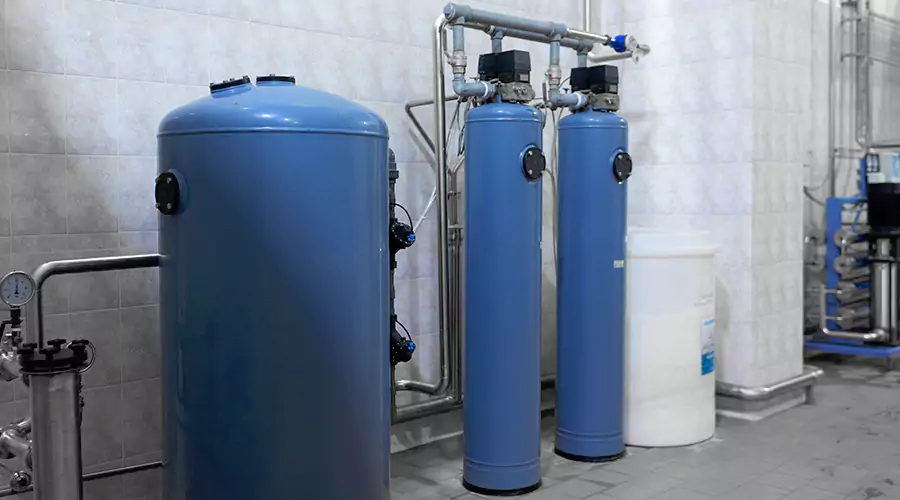
Yes. Nearly every water softener problem can be repaired, and typical water softener repair costs $150 to $600 with the average homeowner paying around $400. Roughly half of all failures are free DIY fixes in the brine tank.
One exception exists. A leak from the control valve head is repairable while a leak from the resin tank seam is not.
Everything else on the failure list has a fix and a price. Here's the full map from free to four figures.
What Can and Can't Be Repaired?
Almost the entire softener is serviceable part by part. Most softener repair jobs end at the brine tank where salt problems live. The control head and the resin bed follow as the two component-level repairs.
The repairable list runs long:
- Salt bridges and salt mush in the brine tank
- Stuck brine valves and floats
- Control head motors and circuit boards
- Exhausted or fouled resin beds
- Clogged venturi valves and injectors
- Worn O-rings and bypass valve seals
The unrepairable list has one entry. A cracked resin tank seam ends the tank's life because the fiberglass shell can't be reliably patched under pressure. Odds favor you though since you can fix water softener problems yourself in about half of cases before any part gets bought.
Insider tip: The symptom's timing narrows the diagnosis fast. Hard water returning gradually points at resin while hard water returning overnight points at salt or the valve.
Salt Problems Are Free Fixes
Salt failures cause the most service calls and cost the least to fix. A hardened crust or a sludge layer stops brine production while every mechanical part still works. Both fixes use a broom handle.
Bridges break in minutes. To fix salt bridge in water softener tanks push a broom handle down to the bottom of the salt tank and a handle that hits hard crust before the bottom confirms the bridge. Break it up and start a manual regeneration cycle.
Mush takes a full cleanout. Salt mushing congeals into sludge that blocks the intake valve and makes the tank overflow during regeneration. The fix means emptying the loose salt and clearing the valve and cleaning the tank before refilling with higher-purity salt.
Professional pricing stays gentle here too since salt bridge and brine tank issues usually cost just $100 to $300 when you'd rather not scoop.
Control Head and Valve Failures
The control head is the softener's brain and its most common paid repair. Electrical and control head problems lead the failure list with repairs typically running $150 to $600. The head times regenerations and drives the valve that cycles water through the resin.
Symptoms read clearly. A display that's dark or flashing or a unit stuck mid-cycle points here. So does a softener that never uses salt despite a clean brine tank. Modern digital valves even confess directly since major valve brands throw codes for motor stalls and position errors that mostly trace to a failed drive motor or position switch or board.
Brand knowledge pays at this tier. A water softener specialist familiar with your valve brand beats a general plumber on these repairs because module-level repair runs $320 to $650 while a full valve head swap costs $550 to $950. The cheaper module path requires knowing the platform.
Insider tip: Photograph any error code before power-cycling the unit. The code plus your model number lets a specialist arrive with the right module instead of a diagnosis visit.
Resin Bed Problems
The resin bed does the actual softening and it wears out like a battery. Exhausted beads stop trading minerals no matter how well everything else works. Hard water returning slowly over months is the signature.
The repair is a refill rather than a new system. You can repair water softener resin tank problems by replacing the resin bed for $200 to $400 on average. Two related findings ride along: yellow resin fragments reaching your faucets mean the bottom distributor needs replacing too while a bacteria-fouled bed can be cleaned with bleach to sanitize the system.
Iron-heavy water shortens every resin lifespan. Homes with iron staining should budget resin changes on a faster cycle or add an iron filter upstream.
Water Softener Leak Repair
Leak location decides everything in this category. Water softener leak repair splits into cheap fittings and fatal seams. Dry the unit fully and watch with a flashlight to find the true origin.
Three origins cover nearly every drip. Loose fittings and worn O-rings at the bypass valve cost dollars and minutes. Control head leaks are repairable through new seals or the module path above. The seam is the exception again because a tank split along its molded seam means the tank is done.
Brine tank cracks land in between since a broken brine tank replaces for $125 to $700 without touching the rest of the system.
Insider tip: Overflowing is not leaking. A brine tank overflowing during regeneration points at mush or a stuck float rather than a cracked tank.
What Repairs Cost in 2026?
Water softener repair pricing runs from a free broom-handle fix to a four-figure rebuild. The average repair lands at $553 with most falling between $162 and $978. The table maps every tier.
| Repair | 2026 cost |
|---|---|
| Salt bridge or mush DIY | Free |
| Salt or brine issues by a pro | $100 to $300 |
| Brine valve or float | $280 to $420 |
| Resin bed replacement | $200 to $400 |
| Control head module or swap | $320 to $950 |
| Motor or board worst case | $900 to $2,500 |
Labor explains the spread. Plumbers charge $45 to $150 per hour and softener repairs take one to three hours. A water softener repair service call alone runs $40 to $100 before parts.
Insider tip: Check warranty status before paying anything because covered parts can cut the bill dramatically.
Repair or Replace
Age and stacking failures decide this question. Units over 10 to 15 years face recurring issues and replacement wins once repair costs exceed 50% of a new system's price. Full softener system repair on an old unit often just schedules the next failure.
The math has clean edges. A new whole-home softener runs $1,800 to $3,500 installed so a $900 control head on a 12-year-old unit fails the 50% test immediately. The clearest case pairs two failures: a unit past 10 years with both the valve and the resin shot is a replacement rather than a rebuild.
Frame the question by age when you call. If you're asking a technician to fix my water softener on a unit under 8 years old then repair almost always wins. Past 12 years let the 50% rule answer instead of hope.
When to Call a Professional
Three situations justify the service fee immediately. Each one involves diagnosis or parts beyond the brine tank. Everything salt-related stays yours.
- Error codes or a dead display. Board and motor work needs the right module and a meter.
- Hard water despite clean salt. Pros service water softener systems with hardness test kits that prove where softening fails.
- Any leak from the head or tank body. Pressure-side repairs deserve pressure-side experience.
Terminology never changes the visit. Water conditioner repair follows the identical playbook because conditioner is mostly a marketing name for the same salt-based machine.
Insider tip: Ask whether the company stocks your valve brand's parts before booking. A tech arriving with the wrong platform's module bills a second visit.
Prevention Beats Every Repair
Routine care prevents most of the paid columns above. Routine maintenance costs $100 to $250 annually and prevents many expensive repairs. Four habits carry the load.
- Clean the brine tank every 6 to 12 months.
- Buy high-purity salt because impurities build both bridges and mush.
- Change prefilters on schedule. Sediment filters need changing every 3 to 6 months and falling house pressure is the reminder.
- Book servicing water softening system visits yearly on units past age five since a $100 checkup catches the $500 problems early.
Conclusion
A water softener can be repaired in nearly every failure except a split resin tank seam. Salt problems fix free while heads and resin fix for hundreds. The 50% rule against a unit's age settles every borderline call. This week push a broom handle into your salt tank and check the display for codes. Five minutes tells you which column of this article you live in.
FAQs
How do I know if the resin is dead or the valve failed?
Run a manual regeneration and test hardness the next morning. Soft water afterward blames the valve timing while hard water blames the resin.
Can I replace resin myself?
Handy owners can. The job means disconnecting the tank and funneling new resin in which takes an afternoon and saves labor.
Why does my softener use no salt for weeks?
A salt bridge is holding the pile above the water. The broom handle test confirms it in ten seconds.
Is bleach safe in a softener?
In controlled doses for sanitizing the resin bed, yes. Follow the manufacturer's procedure rather than free-pouring.
Do repairs differ for Culligan or Kinetico units?
The failures match while the parts are proprietary. Brand-specific technicians may charge more but carry the right components.
What's the lifespan after a major repair?
A new valve or fresh resin on a sound tank buys 5 or more years. That's the case for repairing young units and replacing old ones.